



Not long ago, building a professional website meant one of two things: learn to code, or hire someone who had. The barrier was real. If you were a designer with strong visual instincts but limited technical skills, you were dependent on developers to bring your ideas to life. Timelines stretched. Costs rose. Creative vision got diluted in translation.
Something significant has changed. A wave of no-code and low-code tools has emerged over the past several years, and it is fundamentally altering who can build things on the web — and how. This shift is not a passing trend. It is a structural change in the industry, and understanding it matters whether you are a designer, a freelancer, or anyone who builds for the web.
This post looks at what the no-code movement actually is, why it is gaining momentum now, what it means for designers specifically, and how tools like w3builder represent the leading edge of where web development is heading.
What is the no-code movement?
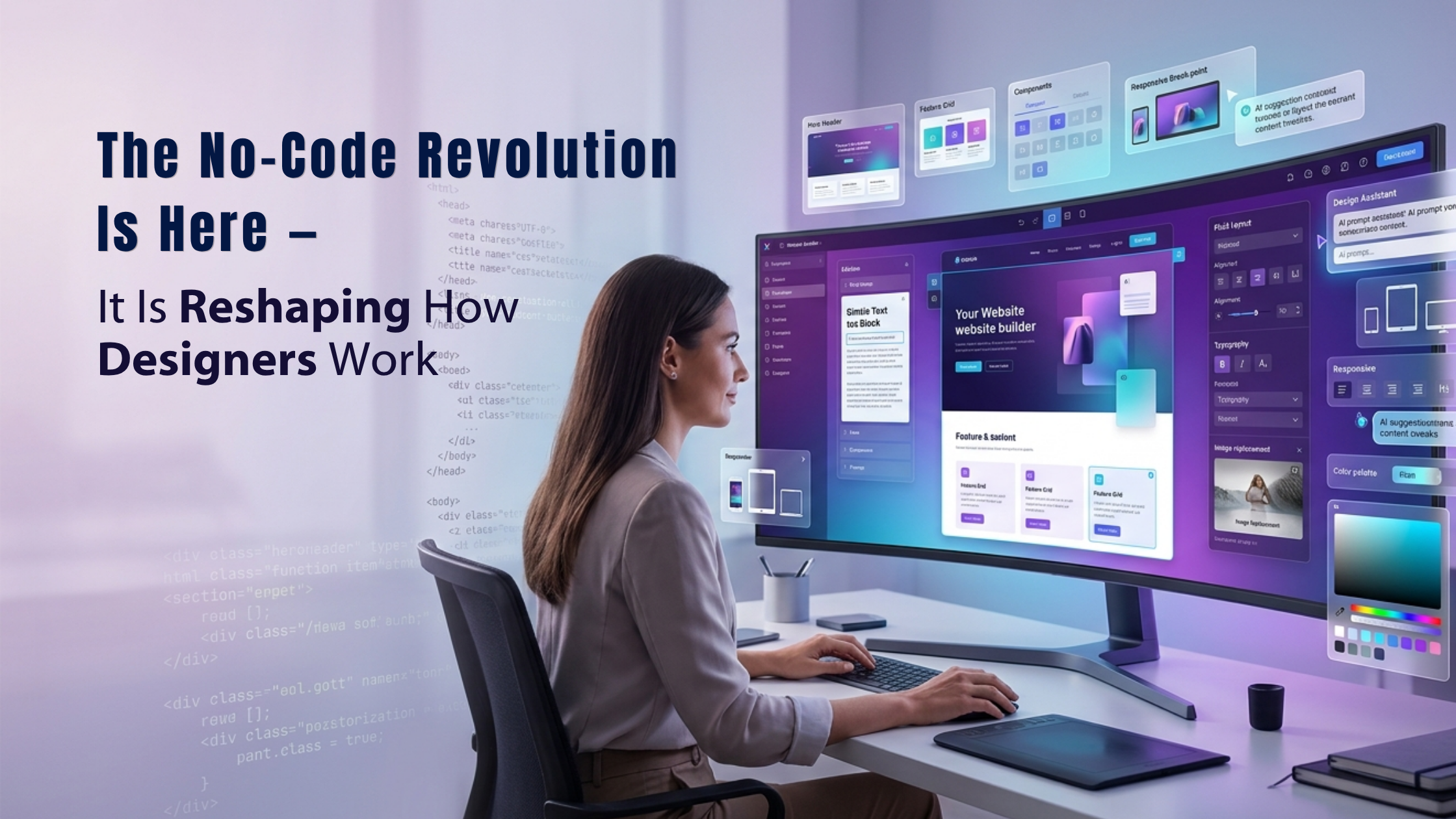
No-code is exactly what it sounds like: the ability to build software, applications, and websites without writing code. Instead of instructing a computer through programming languages, no-code tools use visual interfaces — drag-and-drop editors, form-based configuration, pre-built logic blocks — to let users create functional digital products.
The no-code movement is not new in concept. Spreadsheets were an early form of no-code: they allowed non-programmers to perform complex data operations without writing a single line. What is new is the scope and sophistication of what can now be built without code — and the speed at which that range is expanding.
Today, no-code tools exist for building web apps, automating workflows, creating databases, designing landing pages, launching e-commerce stores, and more. The quality ceiling has risen dramatically. Products built with no-code tools are no longer obviously inferior to coded alternatives.
Why is it happening now?
The timing of the no-code surge is not accidental. Several forces have converged to make this the right moment for the movement to take off.
The developer shortage
Demand for software and web development has consistently outpaced the supply of qualified developers. Hiring a skilled developer is expensive, competitive, and often slow. For small businesses, startups, and individual creators, having a developer on call for every web update is simply not realistic.
No-code tools fill this gap by enabling people without technical skills to build and maintain digital products independently. The business logic is compelling: why wait weeks for a developer to update your website when you could do it yourself in an hour?
The rise of AI
Artificial intelligence has accelerated the no-code movement significantly. AI can now generate copy, suggest layouts, apply design systems, and even write functional code from natural language descriptions. When AI is embedded inside a no-code tool, the result is something genuinely powerful: a visual editor that can understand your intent and act on it.
This is exactly what is happening in tools like w3builder. The combination of visual editing and AI customization means that the gap between what a non-developer can build today and what required a development team five years ago has nearly closed.
Changing expectations around speed
The pace of business has changed. A company that needs a new landing page for a campaign launch cannot wait three weeks for a developer sprint. A freelancer who takes on a new client expects to deliver a website in days, not months. The market has developed an intolerance for slow.
No-code tools are calibrated for this new pace. They are built to compress the time between idea and execution dramatically, without sacrificing professional quality.
What this means for designers
For designers specifically, the no-code movement represents both an opportunity and a challenge. The opportunity is significant: designers can now execute their vision directly, without depending on a developer to translate their mockups into code. The creative loop is tighter. Iteration is faster. The final product is closer to what the designer actually intended.
The end of the handoff bottleneck
The traditional design workflow has a well-known bottleneck: the handoff. A designer finishes their work and passes it to a developer. The developer interprets the design files, makes judgment calls about things that are unclear, and builds something that is close to the original but never quite identical. Then the designer gives feedback, the developer makes revisions, and the cycle repeats.
No-code tools eliminate this entirely for the category of projects they cover. When a designer builds the site themselves in a visual editor, there is no interpretation step. What the designer creates is exactly what the user sees. This is not a small improvement — it fundamentally changes what is possible in a given project timeline.
A new business model for freelancers
For freelance designers, no-code tools have created a new service offering: the full-stack design service. Instead of delivering mockups and handing off to a developer, a freelance designer using no-code tools can now take a project from brief to live website entirely on their own.
This changes the economics of freelancing substantially. A project that previously required splitting fees with a developer can now be handled solo. The designer captures more of the value, the client has a single point of contact, and the project moves faster because there is less coordination overhead.
The challenge: quality still matters
The no-code movement has also lowered the barrier to entry for website building. That means more competition. More websites built by people with less experience. More generic-looking sites using default templates without customization.
For professional designers, this is actually an opportunity. In a world where anyone can build a website, the ones who build great-looking, well-crafted websites stand out even more. No-code tools level the technical playing field — but design taste, strategic thinking, and attention to detail remain differentiators that cannot be automated away.
Where w3builder fits in this picture
W3Builder sits at the intersection of two trends: the no-code movement and the rise of AI-powered design tools. It is not just a visual editor — it is a visual editor with intelligence built into it. The AI customization features understand brand identity, content context, and design principles in ways that earlier no-code tools simply could not.
What makes W3Builder particularly well-positioned is the code export feature. Most no-code tools ask you to trade freedom for convenience: you get a fast workflow, but you are locked into their hosting, their platform, their ongoing subscription. w3builder makes a different bet. Build fast with a visual editor and AI. Export clean, ownable code when you are done.
That is a genuinely different value proposition — one that respects both the designer’s creative control and the client’s need to own their digital assets.
where is this all going?
The no-code movement is not going to make developers obsolete. Complex applications, custom functionality, high-performance systems — these will continue to require serious engineering. But for the large category of projects that are primarily about design and communication rather than complex software logic, the role of code in the production process is shrinking.
The designers and freelancers who adapt to this shift — who learn to use no-code and AI tools as part of their core workflow — are positioning themselves for the next decade of the industry. Those who wait may find themselves on the wrong side of a capability gap that is growing fast.
The question is not whether to embrace no-code tools. The question is which ones are worth your time, and how to use them in a way that enhances rather than limits your professional capabilities.
The bottom line
The no-code revolution is not a threat to professional designers. It is the removal of the technical barriers that have always stood between creative people and the results they want to achieve.
Tools like W3Builder are not replacing skills. They are amplifying it. And that is exactly what the best tools have always done.